All published articles of this journal are available on ScienceDirect.

Tailored Telerehabilitation as a Tool for Reducing Fatigue Severity and Improving Functional Independence among Adults with Multiple Sclerosis
 iD
Atallah Alenezi3
Abdullah Alzahrani4
Kawthar Jamal5
Reham Adel Ebada El Sayed1
iD
Atallah Alenezi3
Abdullah Alzahrani4
Kawthar Jamal5
Reham Adel Ebada El Sayed1
Authors Info & Affiliations
Abstract
Introduction
Chronic Multiple Sclerosis (MS) is a long-term neurological condition that impairs independence and daily functioning. As there is no cure, rehabilitation is a crucial element of care. Telerehabilitation offers an accessible, cost-effective approach that reduces travel barriers. This study aimed to evaluate the effectiveness of tailored telerehabilitation in reducing fatigue severity and improving functional independence, self-management, and overall health status among adults with MS.
Methods
A quasi-experimental trial design was used. A total of 120 adults with MS were assigned equally to intervention and control groups. Riyadh, Saudi Arabia's King Saud Medical City Outpatient Clinic, served as the site of this investigation. Six validated tools measured knowledge, fatigue severity, functional independence, self-management, and health status at baseline, one month, and three months.
Results
The intervention group demonstrated significant improvements in knowledge (+85% from baseline), functional independence (+70%), and reduced fatigue severity (−73%) compared to the control group (p < 0.001). Self-management scores increased by 179%, and overall health profile scores improved markedly.
Discussion
Tailored telerehabilitation is effective in enhancing knowledge, functional independence, MS self-management, and health status while reducing fatigue severity in adults with MS.
Conclusion
This was a single-center study with a moderate sample size, which may limit the generalizability of the findings. Replication in larger studies using probability-based sampling is recommended.
1. INTRODUCTION
Axon demyelination in the CNS is a hallmark of MS, which affects millions, leading to both physical and cognitive challenges [1]. MS is an inflammatory disease that affects the brain and spinal cord over time. Pathologically, the condition is marked by inflammation, gliosis, loss of myelin, and damage to neuro-axonal structures [2]. It primarily impacts adults between the ages of twenty and forty [3]. The average age for an MS diagnosis ranges from 20 to 49 years. From 2013 to 2020, the global population affected by MS rose from 2.3 million to 2.8 million. The condition is 2 to 4 times more prevalent in women [4].
Progressive neurological deterioration is a hallmark of MS, which is initially marked by periods of transitory neurological impairment [5]. Limitations in mobility, low levels of activity-related self-efficacy, and self-regulatory concept capability are common features of the disease [6]. Fatigue, which many people describe as their most incapacitating symptom, relates to difficulties associated with physical or intellectual function and reduces social participation [1].
While there is currently no known cure for MS, therapy attempts to control symptoms, slow the disease's development, decrease relapses, and expedite recovery from attacks. As a result, patients and their families must learn to adapt to the condition due to its complexity, difficulty in selecting a course of therapy, and wide variety of symptoms and effects on most aspects of their lives [7-9].
According to a previous study [10], rehabilitation therapies are essential for MS patients as they can enhance physical and mental function, stimulate participation in daily activities, and support self-management of symptoms. Nevertheless, it presents difficult problems for the delivery of healthcare, necessitating the use of specialist facilities and the commitment of time, which raises the direct and indirect expenses [11]. This highlights how urgently people with MS need better accessibility and more access to expert treatment. Thankfully, new options for MS sufferers' care and support have emerged with the advent of telehealth interventions (TIs) [12, 13].
Recent studies indicate that telerehabilitation is a safe and effective approach for delivering care to individuals with MS, demonstrating positive effects on gait and balance [14]. Tele-rehabilitation could be performed or delivered through video and computer-supported teleconferencing or through programmers and applications of a special design, or downloaded on smartphones. This makes it easy for a patient to be supervised continuously because they can easily access the treatment in the comfort of their home [15]. Therefore, this research contributes to a greater understanding of the effectiveness of tailored telerehabilitation as a tool for reducing fatigue severity and improving functional independence among adults with MS.
1.1. Aim of the Study
This research was conducted to assess the effect of tailored telerehabilitation on diminishing fatigue severity and enhancing functional independence, self-management, and health status profile in individuals with MS.
1.2. Research Hypothesis
This research hypothesized that:
H1. Knowledge levels of adults with MS will improve significantly in contrast to the control group after receiving a personalized telerehabilitation program.
H2. Adults with MS who received a tailored telerehabilitation program will have significantly less fatigue severity level, improvement in functional independence level, improvement in self-management, and a general health status profile than the control group.
1.3. Operational Definition
1.3.1. Tailored Telerehabilitation
It is a viable solution to mitigate several of the identified barriers to care, as it provides the ability to supervise, direct, check, and control a patient program remotely at home through video calls, audio, internet applications, short messaging, and smartphone notifications. Telerehabilitation has been advantageous for diverse physical exercises, educational and behavioral strategies, health status, general profile, and self-care management strategies.
2. METHODS
2.1. Design
A quasi-experimental design employing pre/post-test intervention research alongside a control group was utilized to achieve the objectives of the present investigation.
2.2. Sample Size
The researchers calculated the number of the target population based on the flow rate of the subjects with specific inclusion and exclusion criteria. Epi Info 7 programs (version 21) were used to estimate the sample size using the following parameters:
- Population size: 155 patients over six months
- Expected frequency:50%
- Margin error: 5%
- Confidence Coefficient: 95%
- Minimum sample size: 110 patients.
2.3. Instruments
The study was conducted using a questionnaire containing six parts. The first part contained 14 items of sociodemographic characteristics and information on the clinical data of the study participants.
The second part was the Multiple Sclerosis Knowledge Questionnaire (MSKQ-25) [6]. Individuals with MS were asked to self-evaluate their knowledge of the disease's etiology, genetic predispositions, medical terminology, and diagnosis. The process takes 20 minutes and includes three to five multiple-choice questions. All right answers are added to determine the score, which ranges from 0 to 25. One point per correct answer. The total score of the scale ranged from 0 to 25 grades, as follows: MSKQ score < 50% (0-12 grades), poor, satisfied level of knowledge, score 50% to 70% (13-18 grades), moderately satisfied level of knowledge, and score > 70% (19-25 grades) good, satisfied level of knowledge.
The third part was the Fatigue Severity Scale (FSS) [16], translated into the Arabic language. This nine-item scale asks people to rate how easy it is for them to feel exhausted and how much it affects their motivation, physical activity, job, family, and social lives. A seven-point Likert scale is used to evaluate each point: “strongly disagree” one, “disagree” two, “slightly disagree” three, “neither agree nor disagree” four, “slightly agree” five, “agree” six, and “strongly agree” seven. The total value may be anywhere from 9 to 63. The more severe the weariness a patient experiences in their daily lives, the higher the score. The fatigue level's total score is categorized into three groups: (9-27 grades) mild fatigue, (28-45 grades) medium fatigue, and (46-63 grades) high fatigue.
The fourth part was the Functional Independence Measure (FIM) [17]. A total of 18 items covering motor and cognitive areas make up this functional ability test. The questions are ranked from 1 to 7. The motor domain is further divided into subdomains such as self-care, sphincter control, transfers, and mobility. On the cognitive domain, subdomains such as communication and social cognition are considered. The questionnaire was scored using the following system: 7 for total independence; 6 for modified independence (no helper); 5 for modified dependence (helper); 2 for complete dependence; and 1 for no help at all. The lowest and highest grades that can be achieved are 18 & 126, respectively. A higher score indicates that the patient is experiencing a higher level of independence.
The fifth part was the Multiple Sclerosis Self-Management Scale-Revised (MS SM-R) [18], to conduct a comprehensive evaluation of the knowledge and self-management practices among MS patients. S/FS (Social/Family Support), HPRC (Healthcare Provider Relationship and Communication), TA/B (Treatment Adherence/Barriers), MSKI (MS Knowledge and Information), and HMB (Health Maintenance Behavior) are the five subscales into which the 24 items of the MSSM-R are divided. A 5-point Likert scale is employed to generate scores, with 1 denoting a strong disagreement and 5 denoting a strong agreement. The maximum possible score ranges from 24 to 120, with higher scores suggesting a greater degree of self-management.
The sixth part was NHP-I [19]. It is a tool used to measure the health status in general, which consists of six categories: three items measure energy levels (EL), eight measure pain (P), nine measure emotional reactions (ER), five measure sleep (S), five measure social isolation (SI), and eight measure physical abilities (PA). The total number of items is 38. Responses to the items are recorded as yes (1) or no (0), with each question assigned a weighted value. The total weighted values within each domain sum to 100, and the NHP scores are calculated by averaging the scores across the domains. Overall scores range from 0 (indicating no perceived distress) to 100 (indicating maximum perceived distress).
2.3.1. Validity
Four professors from the field of medical-surgical nursing and one professor from the field of neurology comprised the expert panel that assessed the suggested instruments' face and content validity. They looked at things like simplicity of administration, thoroughness, clarity, and relevancy in the instrument. Their examination led to the conclusion that no changes were required.
2.3.2. Reliability
The study tools' internal consistency was measured using the Alpha Cronbach test. All of the tools were dependable, including the MSKQ-25 (with a reliability of 0.76 according to the previous study), FSS (with a reliability of 0.88), and the MSSM-R subscales for HPRC (0.85), TA/B (0.79), S/FS (0.79), MSKI (0.89), and HMB (0.77).
2.4. Pilot Study
Following approval to move forward with the investigation, a pilot trial was performed with twelve persons (10 percent of the sample) from the aforementioned context, who met the inclusion criteria. In order to evaluate the practicality, understandability, and usefulness of the instruments and to ascertain the duration of data collection, these persons were omitted from the primary sample. Identifying any problems that may impede the researchers or affect the data-collection procedure was the primary goal of this pilot project.
2.5. Data Collection
The research was conducted from January 2024 to September 2024, which included the development of the tools used. It involved a review of recent and relevant literature concerning MS and a tailored tele-rehabilitation program. The researchers visited the Outpatient Clinic at King Saud Medical City twice a week, on Saturdays and Wednesdays. Before data collection began, patients were given a thorough explanation of the study's purpose. Patients who fulfilled the inclusion criteria were studied before and after the tele-rehabilitation program was implemented. Data was collected at one and three months post-application using the same techniques.
Intervention programs were implemented using telenursing, teleconferencing, and other forms of electronic communication to establish a baseline, as well as tele-rehabilitation systems. For the first time, researchers gathered clinical data, MSKQ, FSS, and FIM from patients in addition to interview questionnaires. The researchers created an Arabic-language telerehabilitation program that takes into account patients' knowledge levels by analyzing current and relevant literature [20].
Cases in the intervention group were divided into six groups according to their needs, with an average number of 10 patients. Each group was established through the mobile WhatsApp application and its name (Multiple Sclerosis) to ease communication with patients. Sometimes patients send their questions privately because they don’t like to share their health problems with others. The same researcher conducted twenty-to-thirty-minute sessions twice a week for eight weeks, providing them with customized telerehabilitation. Sessions were scheduled in accordance with the mutual availability of the researcher and the participants. Skype was employed to facilitate telerehabilitation.
In order to minimize outside distractions, participants were asked to notify others in their family, close the room's doors and windows, and put their phones on silent mode before the sessions began. It was suggested that they sit in a comfortable chair, close their eyes, and relax for the duration of the sessions. Each session began with relaxation exercises designed to improve participants' ability to pay attention and concentrate during the intervention.
In each online session, researchers asked the patient whether they had adapted the previously given instructions. The other part of the session was about giving information related to MS, and before ending the online sessions, the patient was again invited to ask their questions.
2.6. Evaluation Phase
After adults with MS underwent tailored telerehabilitation for one month, the researchers took a second measurement (post1 telerehabilitation) utilizing the same data collection tools (patient knowledge questionnaire MSKQ, FSS, FIM, and NHP-I) to compare results before, during, and after the intervention. After three months, the researchers took a third measurement (post-2 telerehabilitation) to further evaluate the program's efficacy.
2.7. Ethics Consideration
This study was approved by the Shaqra University Research Ethics Standing Committee (ERC_SU_S_ 202300048), and other pertinent organizations granted permission to carry out the investigation. MS adults who met the inclusion criteria were invited to participate; they were told it was totally optional and that they could stop at any time without explanation. Participants were given the assurance that their data would be used exclusively for research. It was also stressed that the intervention was completely harmless to the participants and would not harm them.
2.8. Statistical Design
Statistical Package for the Social Sciences (SPSS) version 26 was utilized to encrypt the data before feeding it into a personal computer. To make sense of the data, descriptive statistics were employed, such as percentages and frequencies. To find correlations between qualitative variables, the chi-square test was used, and the mean ± SD was also computed. We regarded a p-value of below or equal to 0.001 to be very significant, and a p-value of 0.05 or less to be significant. Using the r-test as an inferential statistic, we compared the pre- and post-tele-rehabilitation groups' levels of MSKQ, total FIM, total FSS level, and total NHP-I. The tele-rehabilitation group also served as a control group.
3. RESULTS
The mean age of the examined cases was 42.46±3.6 and 43.57±4.1 years for the tailored telerehabilitation and control groups, respectively. 71.7% and 66.7% of patients in the tailored telerehabilitation group and control group were females, and 28.3% and 33.3% were males, respectively. 61.7% of them were married. 56.7% of the tailored telerehabilitation group had a moderate education level, compared to 45.0% of the control group. 71.7% and 63.3% of the studied patients lived in a city for the tailored telerehabilitation and control groups, respectively. 86.7% and 90% of the patients were living with the family for tailored telerehabilitation and control groups, respectively. 45.0% of the tailored telerehabilitation group had their work capacity with restrictions, whereas that of the control group was 48.3%. 55.0%. Of the individuals in the personalized telerehabilitation group, and 53.3% of those in the control group did not smoke (Table 1).
Table 1.
| Personal Characteristics |
Tailored Telerehabilitation Group (n=60) |
Control Group (n=60) |
Chi-square | |||
|---|---|---|---|---|---|---|
| N | % | N | % | X2 | P-value | |
| Age (years) | ||||||
| 20 < 35 | 30 | 50.0 | 26 | 43.3 | 0.625 | 0.732 |
| 35 < 50 | 17 | 28.3 | 18 | 30.0 | ||
| 50 ≤ 60 | 13 | 21.7 | 16 | 26.7 | ||
| Mean±SD | 42.46±3.6 | 43.57±4.1 | ||||
| Range | 22-58 | 25-60 | ||||
| Gender | ||||||
| Female | 43 | 71.7 | 40 | 66.7 | 0.352 | 0.553 |
| Male | 17 | 28.3 | 20 | 33.3 | ||
| Marital status | ||||||
| Married | 37 | 61.7 | 37 | 61.7 | 0.000 | 1.000 |
| Unmarried | 23 | 38.3 | 23 | 38.3 | ||
| Level of education | ||||||
| Read/ Write | 13 | 21.7 | 18 | 30.0 | 1.753 | 0.416 |
| Moderate education | 34 | 56.7 | 27 | 45.0 | ||
| Academic education | 13 | 21.7 | 15 | 25.0 | ||
| Living area | ||||||
| In a city | 43 | 71.7 | 38 | 63.3 | 0.950 | 0.330 |
| In a village | 17 | 28.3 | 22 | 36.7 | ||
| Living status | ||||||
| Alone | 8 | 13.3 | 6 | 10.0 | 0.323 | 0.570 |
| Live with the family | 52 | 86.7 | 54 | 90.0 | ||
| Work capacity | ||||||
| Without restrictions | 24 | 40.0 | 24 | 40.0 | 0.321 | 0.852 |
| With restrictions | 27 | 45.0 | 29 | 48.3 | ||
| Disability pension | 9 | 15.0 | 7 | 11.7 | ||
| Smoking habit | ||||||
| Yes | 27 | 45.0 | 28 | 46.7 | 0.034 | 0.855 |
| No | 33 | 55.0 | 32 | 53.3 | ||
Mean duration of illness per year in the tailored telerehabilitation group was 8.95±4.42 years, whereas that in the control group was 8.17±4.02 years. Time between onset and diagnosis per month in the tailored telerehabilitation group was 1.73±0.45 months, whereas that in the control group was 1.78±0.42 months. The relative frequency of hospital admission and number of attacks per year in the tailored telerehabilitation group were 4.40±2.99 and 4.13±2.78 times, respectively, whereas those in the control group were 4.38±2.73 and 4.72±2.89 times, respectively. Additionally, the mean EDSS score was 3.37±1.55 in the tailored telerehabilitation group, compared to a 3.13±1.29 score in the control group. In addition, 73.3% and 78.3% of patients in the tailored telerehabilitation group and control group received immunomodulatory therapy, respectively (Table 2).
| Patients' Clinical Data |
Tailored Telerehabilitation Group (n=60) |
Control Group (n=60) |
Chi-square | |||
|---|---|---|---|---|---|---|
| N | % | N | % | X2 | P-value | |
| Duration of illness/ Years | ||||||
| <5 | 8 | 13.3 | 9 | 15.0 | 0.977 | 0.614 |
| 5-10 | 31 | 51.7 | 35 | 58.3 | ||
| >10 | 21 | 35.0 | 16 | 26.7 | ||
| Mean±SD | 8.95±4.42 | 8.17±4.02 | ||||
| Range | 1-19 | 2-17 | ||||
| Time between onset and diagnosis/months | ||||||
| < 1 year | 16 | 26.7 | 13 | 21.7 | 0.409 | 0.522 |
| > 1 year | 44 | 73.3 | 47 | 78.3 | ||
| Mean±SD | 1.73±0.45 | 1.78±0.42 | ||||
| Hospital admission /1 year | ||||||
| Non | 4 | 6.7 | 2 | 3.3 | 0.859 | 0.651 |
| < 3 times | 24 | 40.0 | 27 | 45.0 | ||
| > 3 times | 32 | 53.3 | 31 | 51.7 | ||
| Mean±SD | 4.40±2.99 | 4.38±2.73 | ||||
| Number of attacks (1 year) | ||||||
| once | 6 | 10.0 | 6 | 10.0 | 0.156 | 0.925 |
| twice | 22 | 36.7 | 20 | 33.3 | ||
| more | 32 | 53.3 | 34 | 56.7 | ||
| Mean±SD | 4.13±2.78 | 4.72±2.89 | ||||
| EDSS score | ||||||
| Mean±SD | 3.37±1.55 | 3.13±1.29 | 0.895 | 0.373 | ||
| Immunomodulatory therapy | ||||||
| Yes | 44 | 73.3 | 47 | 78.3 | 0.409 | 0.522 |
| No | 16 | 26.7 | 13 | 21.7 | ||
93.3% and 96.7% of patients in both the tailored telerehabilitation group and the control group had a low level of knowledge (MSKQ) pre-application of tailored telerehabilitation, respectively (Fig. 1). In contrast, 76.7% and 100% of them had a moderate and good level of MSKQ post 1 month and post 3 months of tailored telerehabilitation, respectively, and this difference between the groups was highly significant (p < .01).
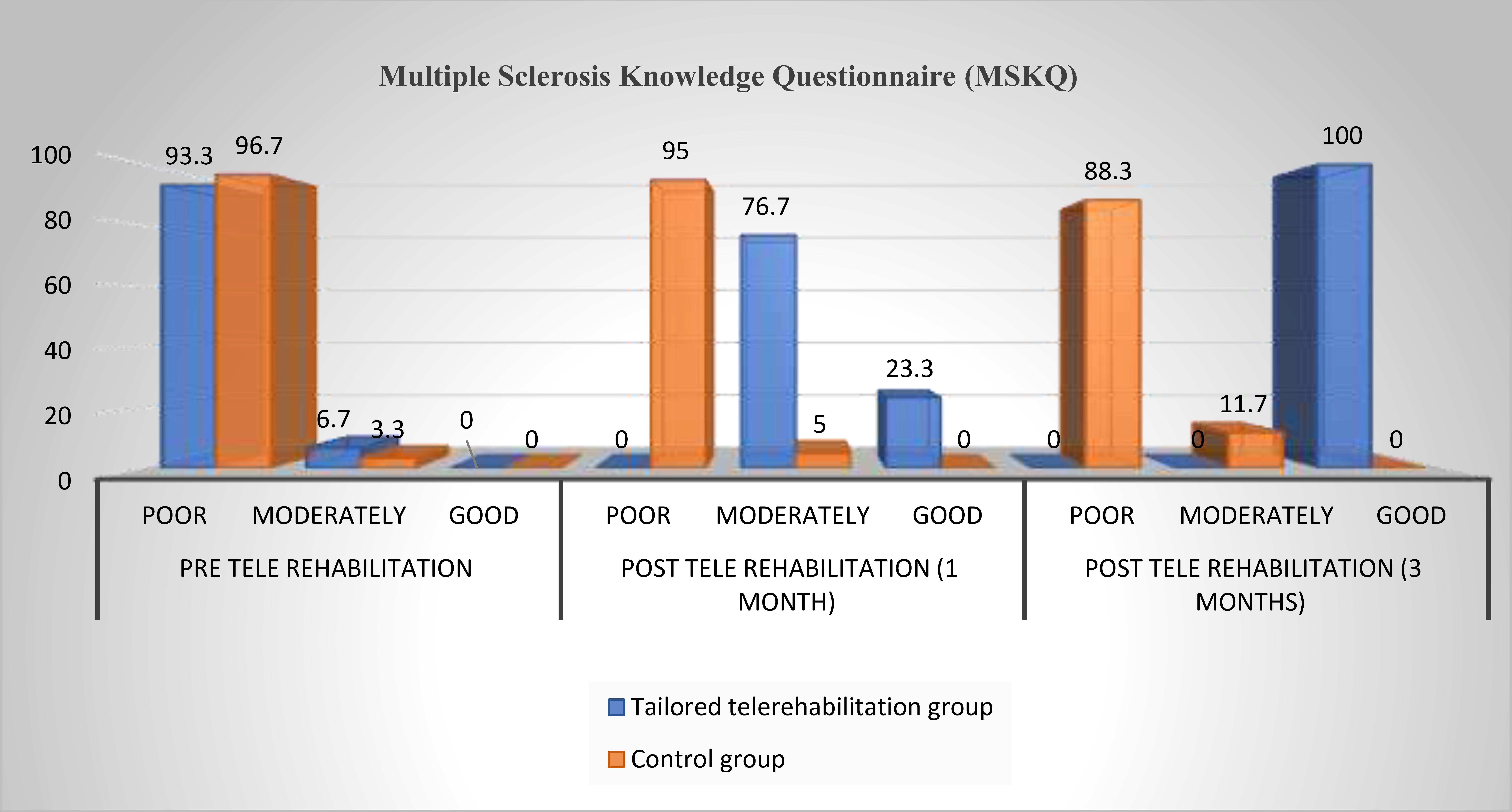
Satisfactory level of MSKQ of tailored telerehabilitation group and control group pre-tailored telerehabilitation, after 1 month & after 3 months’ post-tailored telerehabilitation application. (n=120).
100.0% of patients in both the tailored telerehabilitation group and the control group had a high level of fatigue severity (FSS) pre- application of tailored telerehabilitation (Fig. 2). In contrast, 55% and 100% of them had a mild level of FSS post 1 month and post 3 months of tailored telerehabilitation application, respectively, and this difference between the groups was highly statistically significant (p < .01).
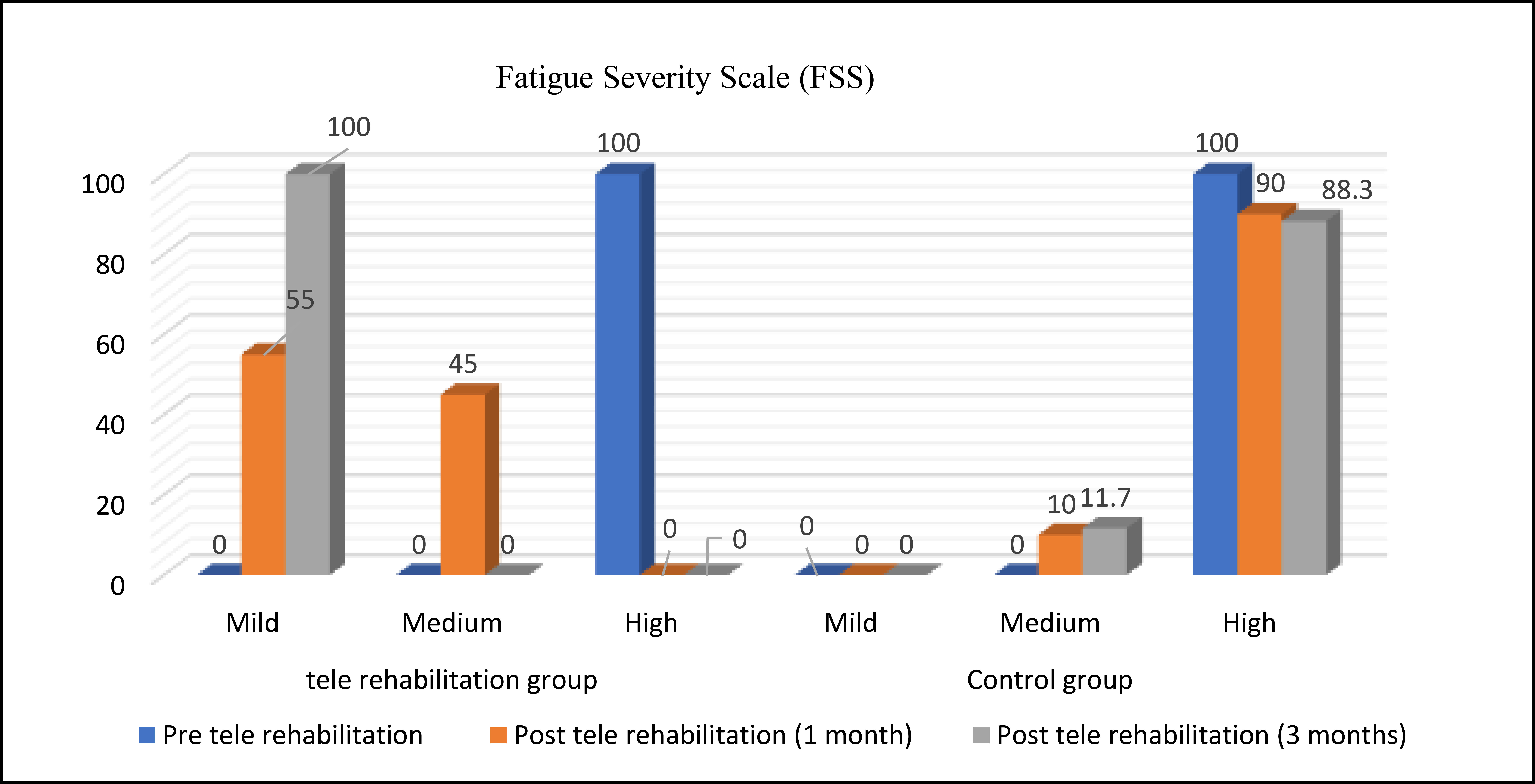
Total FSS level of tailored telerehabilitation group and control group pre-tailored telerehabilitation, after one- and three-months’ post-tailored telerehabilitation application (n=120).
Before the implementation of personalized telerehabilitation, neither group's patients' levels of FSS were significantly different (Table 3). Unlike the control group, the personalized telerehabilitation group showed a highly significant difference (p < 0.001) after 1 month and 3 months of using the program.
| FSS Level | FSS Level | ||||||||
|---|---|---|---|---|---|---|---|---|---|
| Pre-tailored Telerehabilitation |
Post-tailored Telerehabilitation (1 Month) |
Post-tailored Telerehabilitation (3 Months) |
|||||||
|
Tailored Telerehabilitation Group (n=60) |
Control Group (n=60) |
t1 |
Tailored Telerehabilitation Group (n=60) |
Control Group (n=60) |
t2 |
Tailored Telerehabilitation Group (n=60) |
Control Group (n=60) |
t3 | |
| X±SD | X±SD | [p-value] | X±SD | X±SD | [p-value] | X±SD | X±SD | [p-value] | |
| 1. My motivation is lower when I am fatigued | 6.27±0.88 | 6.17±0.85 | 0.634 [0.527] |
3.08±0.56 | 5.45±1.05 | 15.416 [<0.001*] |
1.67± 0.63 |
5.68± 1.14 |
23.861 [<0.001*] |
| 2. Exercise brings on my fatigue | 5.47±1.33 | 5.68±1.11 | 0.966 [0.336] |
2.93±0.55 | 5.18±1.05 | 14.719 [<0.001*] |
1.50± 0.79 |
5.57± 1.18 |
22.112 [<0.001*] |
| 3. I am easily fatigued | 6.77±0.43 | 6.63±0.80 | 1.137 [0.258] |
3.03±0.52 | 5.70±1.03 | 17.904 [<0.001*] |
1.42± 0.59 |
5.38± 1.26 |
22.030 [<0.001*] |
| 4. Fatigue interferes with my physical functioning | 6.07±0.82 | 5.88±1.19 | 0.980 [0.329] |
3.05±0.65 | 6.00±0.80 | 22.140 [<0.001*] |
1.50± 0.72 |
5.82± 1.16 |
24.490 [<0.001*] |
| 5. Fatigue causes frequent problems for me | 6.32±0.47 | 6.32±0.91 | 0.000 [1.000] |
3.07±0.58 | 5.77±1.09 | 16.890 [<0.001*] |
1.68± 0.83 |
5.53± 1.02 |
22.690 [<0.001*] |
| 6. My fatigue prevents sustained physical functioning | 6.10±0.97 | 6.33±0.91 | 1.357 [0.178] |
2.95±0.53 | 5.82±0.95 | 20.410 [<0.001*] |
1.55± 0.81 |
5.65± 1.20 |
21.863 [<0.001*] |
| 7. Fatigue interferes with carrying out certain duties and responsibilities | 6.32±0.75 | 6.33±1.02 | 0.102 [0.919] |
2.97±0.58 | 5.52±1.14 | 15.411 [<0.001*] |
1.62± 0.76 |
5.62± 1.11 |
23.076 [<0.001*] |
| 8. Fatigue is among my most disabling symptoms | 6.10±0.90 | 6.13±1.02 | 0.191 [0.849] |
2.92±0.65 | 5.78±1.09 | 17.521 [<0.001*] |
1.52± 0.75 |
5.52± 1.11 |
23.119 [<0.001*] |
| 9. Fatigue interferes with my work, family, or social life | 6.20±0.92 | 6.40±0.87 | 1.227 [0.222] |
2.88±0.58 | 6.03±0.91 | 22.521 [<0.001*] |
1.60± 0.69 |
5.62± 1.11 |
23.829 [<0.001*] |
| Total FSS | 55.60±2.75 | 55.88±2.64 | 0.575 [0.566] |
26.88±2.64 | 51.15±3.70 | 41.339 [<0.001*] |
14.83± 4.16 |
53.25± 6.19 |
39.913 [<0.001*] |
Mean score of motor functional independence measure domain in the tele-rehabilitation group pre- application of tailored telerehabilitation was 25.87±8.47score, post one-month application was 61.92±12.81 score, and post 3 months’ application was 79.37±9.67 score. There was a highly statistically significant difference (p < 0.001). Concerning the cognitive functional independence measure, in the tailored telerehabilitation group, the pre-application score was 36.03±8.42, the post-1-month application score was 84.43±15.36, and the post-3-month application score was 109.18±10.31, and these differences were highly statistically significant (Table 4).
| FIM Domains | FIM Level | ||||||||
|---|---|---|---|---|---|---|---|---|---|
| Pre-tailored Telerehabilitation |
Post-tailored Telerehabilitation (1 Month) |
Post-tailored Telerehabilitation (3 Months) |
|||||||
|
Tailored Telerehabilitation Group (n=60) |
Control Group (n=60) |
t1 |
Tailored Telerehabilitation Group (n=60) |
Control Group (n=60) |
t2 |
Tailored Telerehabilitation Group (n=60) |
Control Group (n=60) |
t3 | |
| X±SD | X±SD | [p-value] | X±SD | X±SD | [p-value] | X±SD | X±SD | [p-value] | |
| FIM (Motor) | 25.87± 8.47 |
23.57± 8.02 |
1.528 [0.129] |
61.92± 12.81 |
20.57± 5.00 |
23.296 [<0.001*] |
79.37± 9.67 |
23.55± 5.94 |
38.097 |
| [<0.001*] | |||||||||
| FIM (Cognitive) |
10.17± 3.46 |
10.85± 3.27 |
1.112 [0.268] |
22.52± 4.22 |
12.43± 2.66 |
15.660 [<0.001*] |
29.82± 3.30 |
12.62± 2.87 |
30.454 [<0.001*] |
| Total FIM | 36.03± 8.42 |
34.42± 9.06 |
1.013 [0.313] |
84.43± 15.36 |
33.00± 5.46 |
24.435 [<0.001*] |
109.18± 10.31 |
36.17± 5.99 |
47.431 [<0.001*] |
Mean score total MSSM-R in tailored telerehabilitation group pre- application of tailored telerehabilitation was 194.02± 19.83 score, post one-month application was 390.95±24.07 score, and post 3 months application was 542.61±28.76 score. Highly statistically significant differences were found in all MSSM-R subscales in the tailored telerehabilitation group at post-1 month and post-3 months (Table 5).
|
Subscales of MSSM-R |
MSSM-R | ||||||||
|---|---|---|---|---|---|---|---|---|---|
| pre Telerehabilitation |
Post Telerehabilitation (1 Month) |
Post telerehabilitation (3 Months) |
|||||||
|
tele-rehabilitation Group (n=60) |
Control Group (n=60) |
t1 |
tele-rehabilitation Group (n=60) |
Control Group (n=60) |
t2 |
tele-rehabilitation Group (n=60) |
Control group (n=60) |
t3 | |
| X±SD | X±SD | [p-value] | X±SD | X±SD | [p-value] | X±SD | X±SD | [p-value] | |
| 1. Treatment adherence and barriers | 40.53± 8.79 |
38.65± 8.94 |
1.163 | 78.98± 9.67 |
42.07± 10.87 |
19.651 [<0.001*] |
108.0±8 11.93 |
46.15 9.85 |
30.999 [<0.001*] |
| [0.247] | |||||||||
| 2. Understanding and actively learning about MS | 38.33± 10.46 |
39.87± 8.04 |
0.393 | 77.63± 10.75 |
44.33± 9.93 |
109.20± 11.77 |
42.73 9.43 |
34.141 [<0.001*] |
|
| [0.695] | 17.620 [<0.001*] |
||||||||
| 3. Managing one’s health on a day-to-day basis | 37.27± 8.06 |
39.87± 8.04 |
1.769 [0.079] |
80.33± 11.93 |
36.02± 10.23 |
21.850 [<0.001*] |
109.32± 11.41 |
44.00 10.77 |
32.245 [<0.001*] |
| 4. Being an active participant in decision-making with health professionals | 39.48± 9.60 |
38.22± 7.40 |
0.810 [0.420] |
75.03± 8.80 |
47.43± 7.98 |
17.996 [<0.001*] |
107.33± 12.43 |
44.13 9.80 |
30.930 [<0.001*] |
| 5. Managing the impact of MS on one’s physical, emotional, and social life | 35.60± 8.14 |
36.68± 7.13 |
0.775 [0.440] |
77.20± 8.57 |
42.95± 9.98 |
20.177 [<0.001*] |
107.68± 12.87 |
41.00 10.56 |
31.029 [<0.001*] |
| Total MSSM-R | 194.02± 19.83 |
195.43± 20.15 |
0.388 [0.699] |
390.95± 24.07 |
215.8± 25.4 |
38.767 [<0.001*] |
542.61± 28.76 |
220.93 22.3 |
68.465 [<0.001*] |
Mean score total NHP-I in the tailored telerehabilitation group pre- application of tailored telerehabilitation was 528.40±20.36 score, post one-month application was 313.53±21.57 score, and post 3 months’ application was 137.87±26.68 score. Highly statistically significant differences were found in all NHP-I parameters in the tailored telerehabilitation group post one-month and post 3 months’ application (p < 0.001) (Table 6).
|
NHP-I sub-parameters |
NHP-I | ||||||||
|---|---|---|---|---|---|---|---|---|---|
| Pre-tailored Telerehabilitation |
Post-tailored Telerehabilitation (1 Month) |
Post-tailored Telerehabilitation (3 Months) |
|||||||
|
Tailored Telerehabilitation Group (n=60) |
Control Group (n=60) |
t1 |
Tailored Telerehabilitation Group (n=60) |
Control Group (n=60) |
t2 |
Tailored Telerehabilitation Group (n=60) |
Control Group (n=60) |
t3 | |
| X±SD | X±SD | [p-value] | X±SD | X±SD | [p-value] | X±SD | X±SD | [p-value] | |
| Energy level | 86.47± 10.62 |
88.03± 9.07 |
0.869 [0.387] |
51.38± 10.27 |
89.88± 8.61 |
22.246 [<0.001*] |
25.90± 10.23 |
85.50± 13.64 |
27.073 |
| [<0.001*] | |||||||||
| Pain | 86.85± 10.51 |
89.43± 9.50 |
1.413 [0.160] |
52.05± 9.34 |
85.17± 10.58 |
18.184 [<0.001*] |
18.90± 10.57 |
84.18± 8.09 |
37.996 [<0.001*] |
| Emotional reactions | 87.47± 10.08 |
88.52± 8.01 |
0.632 [0.529] |
52.62± 10.11 |
87.62± 8.44 |
20.588 [<0.001*] |
22.08± 11.01 |
85.25± 9.24 |
34.051 [<0.001*] |
| Sleep | 89.22± 8.92 |
86.98± 8.39 |
1.413 [0.160] |
52.03± 8.39 |
88.53± 8.80 |
23.252 [<0.001*] |
22.22± 7.95 |
87.10± 9.89 |
37.452 [<0.001*] |
| Social isolation | 90.58± 7.77 |
87.68± 9.75 |
1.801 [0.074] |
54.72± 8.87 |
88.52± 8.86 |
20.875 [<0.001*] |
23.97± 9.76 |
88.12± 8.98 |
39.604 [<0.001*] |
| Physical abilities | 87.82± 9.93 |
89.85± 8.38 |
1.212 [0.228] |
50.73± 9.91 |
82.63± 9.56 |
17.943 [<0.001*] |
24.80± 8.32 |
88.65± 7.82 |
43.306 [<0.001*] |
| Total NHP-I | 528.40± 20.36 |
530.50± 17.08 |
0.612 [0.542] |
313.53± 21.57 |
522.35± 23.51 |
50.695 [<0.001*] |
137.87± 26.68 |
518.80± 26.99 |
77.756 [<0.001*] |
4. DISCUSSION
The study population primarily comprised middle-aged adults, with a predominance of females, aligning with national prevalence data on MS in Saudi Arabia. The uniformity in demographic and baseline clinical data between groups strengthens the attribution of observed improvements to the telerehabilitation intervention. Significant gains in knowledge, functional independence, and fatigue reduction reflect the value of customized, remotely delivered programs in overcoming traditional rehabilitation barriers. These findings are consistent with global literature, where telerehabilitation has shown comparable efficacy to in-person interventions. The greater improvements observed at three months versus one month highlight the importance of sustained engagement. This underscores the role of habit formation and progressive adaptation to prescribed exercises and educational strategies. Limitations include the single-center design, moderate sample size, and reliance on self-reported measures, which may introduce response bias. Future research should explore multi-center trials, longer follow-up durations, and objective digital activity tracking to validate and extend these results.
Gender: the highest percentages in the study and control group patients were female; this result agrees with a previous study [21], which found that less than three-quarters of patients with MS were female in their study in Saudi Arabia. This could be attributed to testosterone, the male sex hormone, which is believed to provide protection against autoimmunity by interacting with immune cells and exerting immunosuppressive effects. This suppression is thought to be one mechanism contributing to the lower prevalence of autoimmune conditions, including MS, in men [22].
Below two-thirds of patients in the study were married; this finding corresponds with a previous study [23], which found that less than half of patients with MS were married in the study in Saudi Arabia. This might be due to the age range of the study group being 22-58, whereas the control group was 25-60.
This finding is contrasted with the findings of Albarraq et al. [24], who conducted a study on MS and discovered that more than two-thirds of the patients under study had university degrees. In terms of educational level, less than one-quarter of both the study group and the control group had an academic education. There is a possibility that this is because patients with a high level of education prefer to rely on themselves and look for information to fulfill their requirements.
The urban areas were the residence of less than two-thirds of the control group and less than three-quarters of the research group. This conclusion is corroborated by Alsharif et al. [25], who discovered that the majority of MS patients in Saudi Arabia lived in cities. The researcher believes this may be attributed to the study being conducted in a public hospital, which often receives a significant proportion of patients from rural areas.
Living arrangements, the majority of participants in both the telerehabilitation and control groups resided with family, a finding consistent with a previous study [26], which affirmed that most MS patients lived with family or a spouse. This may be attributed to the fact that fewer than two-thirds of the patients under investigation were married.
More than half of the patients in both the study and control groups did not smoke. This finding is not corroborated by Bashamakh et al. [27], who reported a greater prevalence of male smokers with MS in their study conducted in Saudi Arabia. This may be attributable to the presence of numerous participants who are female.
The annual frequency of hospital admissions was noted that over fifty percent of patients with MS in both the study and control groups were hospitalized more than three times per year [28]. It was reported that the median annual hospitalizations varied from one to two, with a median duration of hospitalization of four days. This pattern is attributed to the relapse phases of the disease, which result in multiple hospital admissions.
One-third of both the control and study groups experienced two attacks within a year. This conclusion contradicts the results obtained in a previous study [29], which reported that over half of patients with MS experienced two attacks within a year. This may be associated with the observation that over fifty percent of patients with MS in both the study and control groups had diagnosis durations ranging from five to ten years, and MS attacks often manifest most frequently within the initial years.
The mean of EDSS among the study and control groups was (3.37± 1.55 and 3.13±1.29), respectively. This finding corresponds with that of a previous study [20], which stated that the mean of EDSS was 3.5 in the study. This may be related to the criterion that an EDSS score exceeding 7 is required for sample inclusion.
Approximately three-quarters of those with MS in both the study and control groups were undergoing immunomodulatory therapy, consistent with the findings of Al Thubaiti et al. [30], who identified immunotherapy as the most frequently utilized medication in their research. This can be ascribed to the prevalence of immunotherapies among individuals with relapsing-remitting MS, which directly inhibit the immune system.
The results revealed no statistically significant difference between the two groups for demographic features and medical data. This indicates uniformity in demographic and clinical factors, enabling the researcher to attribute the observed effects in the intervention group to the implemented customized telerehabilitation intervention. The findings are corroborated by a previous research [31] on MS, which revealed no significant differences between the two groups in baseline parameters, including age, sex, or residence.
This finding indicated a statistically significant difference in patients' knowledge before and after the personalized telerehabilitation session. The findings demonstrated that all patients exhibited substantial knowledge following three months of a customized telerehabilitation session. This finding is not corroborated by Al-Hamdan et al. [32], who discovered that around one-third of participants possessed enough knowledge of MS in their study conducted in Saudi Arabia. The disparity in knowledge observed in this research may be attributed to insights gained through customized telerehabilitation.
The findings indicated that the mean values of the Functional Independence Measure (FIM) among the subjects demonstrated statistically significant improvement in the study group, attributed to the beneficial impact of the customized telerehabilitation intervention. The findings are corroborated by another research [33], which assessed the impact of supervised workouts versus telerehabilitation on individuals with MS and concluded that both modalities enhance independence, as measured by the Functional Independence Measure (FIM), for these patients.
A reduction in the mean Fatigue Severity Scale score was observed in the study group relative to the control group, with a statistically significant improvement in the study group. This effect may be attributed to the introduction of a customized telerehabilitation strategy that alleviates fatigue in individuals with MS. This finding is corroborated by a previous study [34], which reported that both telerehabilitation and onsite rehabilitation significantly improved fatigue awareness and balance in a cohort of patients with MS and intermediate disability.
Reduction in the mean score of the fatigue severity and mean value of MSSM-R is also significantly improved in the study group relative to the control group, with statistically significant enhancement observed in the study group. This may be attributed to the introduction of a customized telerehabilitation strategy that alleviates fatigue and improves MSSM-R in individuals with MS. This finding is corroborated by Petracca et al. [34], who indicated that both telerehabilitation and onsite rehabilitation significantly enhanced tiredness awareness and balance in a cohort of MS patients with intermediate disability.
The mean value of the NHP-I improved following a tailored telerehabilitation intervention, as evidenced by a significant reduction in the mean value among patients in the study group at the conclusion of the follow-up. This may be attributed to the beneficial impact of telerehabilitation on the quality of life concerning overall health status in patients with MS. This finding is corroborated by a previous study [33], which asserted that supervised activities, in comparison to telerehabilitation, can enhance the Nottingham Health Profile (NHP-I) for individuals with MS.
Findings of this study corroborate the research hypothesis that customized telerehabilitation will positively influence knowledge, functional independence, tiredness severity, self-management, and health status profile of patients with MS. This outcome is corroborated by another previously conducted research [20], which assessed the advantages of telerehabilitation for individuals with MS, asserting that it has the capacity to provide the requisite daily rehabilitation for optimal clinical benefit.
CONCLUSION
This study concludes that tailored telerehabilitation substantially improves knowledge, functional independence, self-management, and overall health status while significantly reducing fatigue severity among adults with MS. The intervention offers a scalable, cost-effective alternative to traditional rehabilitation models.
RECOMMENDATION
Based on the Study's Findings: Implement tailored telerehabilitation as a standard supportive care option for MS patients, integrating it into national rehabilitation protocols. Conduct multi-center studies with larger, more diverse samples to improve generalizability. Incorporate continuous training for healthcare professionals to optimize remote delivery techniques. Utilize technology-enabled monitoring to track patient adherence and progress objectively. Additional studies should be conducted with a larger sample size that includes participants from various regions in Saudi Arabia to enhance the generalizability of the findings from this study. Ongoing training and educational initiatives should be developed for patients with MS, leveraging diverse educational media and distance-learning technologies.
AUTHORS’ CONTRIBUTIONS
The authors confirm their contributions to the paper as follows: K.J.: Performed data curation; R.E.S.: Responsible for data collection; A.A.: Conducted the analysis and interpreted the results; and R.S.R. and A.A.: Drafted the manuscript. All authors reviewed the results and approved the final version of the manuscript.
LIST OF ABBREVIATIONS
| MS | = Multiple Sclerosis |
| Tis | = Telehealth Interventions |
| MSKQ | = Multiple Sclerosis Knowledge Questionnaire |
| FSS | = Fatigue Severity Scale |
| FIM | = Functional Independence Measure |
| MS SM-Ra | = Multiple Sclerosis Self-Management Scale-Revised |
ETHICS APPROVAL AND CONSENT TO PARTICIPATE
Ethical approval for this study was obtained from the (Local Committee of Research Ethics at Shaqra University), (Shaqra University), Saudi Arabia with approval reference number: (ERC_SU_S_202300048).
HUMAN AND ANIMAL RIGHTS
All procedures performed in studies involving human participants were in accordance with the ethical standards of institutional and/or research committee and with the 1975 Declaration of Helsinki, as revised in 2013.
AVAILABILITY OF DATA AND MATERIALS
The data supporting the findings of the article will be available from the corresponding author [R.R] upon reasonable request.
ACKNOWLEDGEMENTS
The authors would also like to acknowledge all the respondents, who helped the researchers in data collection but were not involved in the study design, analysis, interpretation of data, or writing of the manuscript.